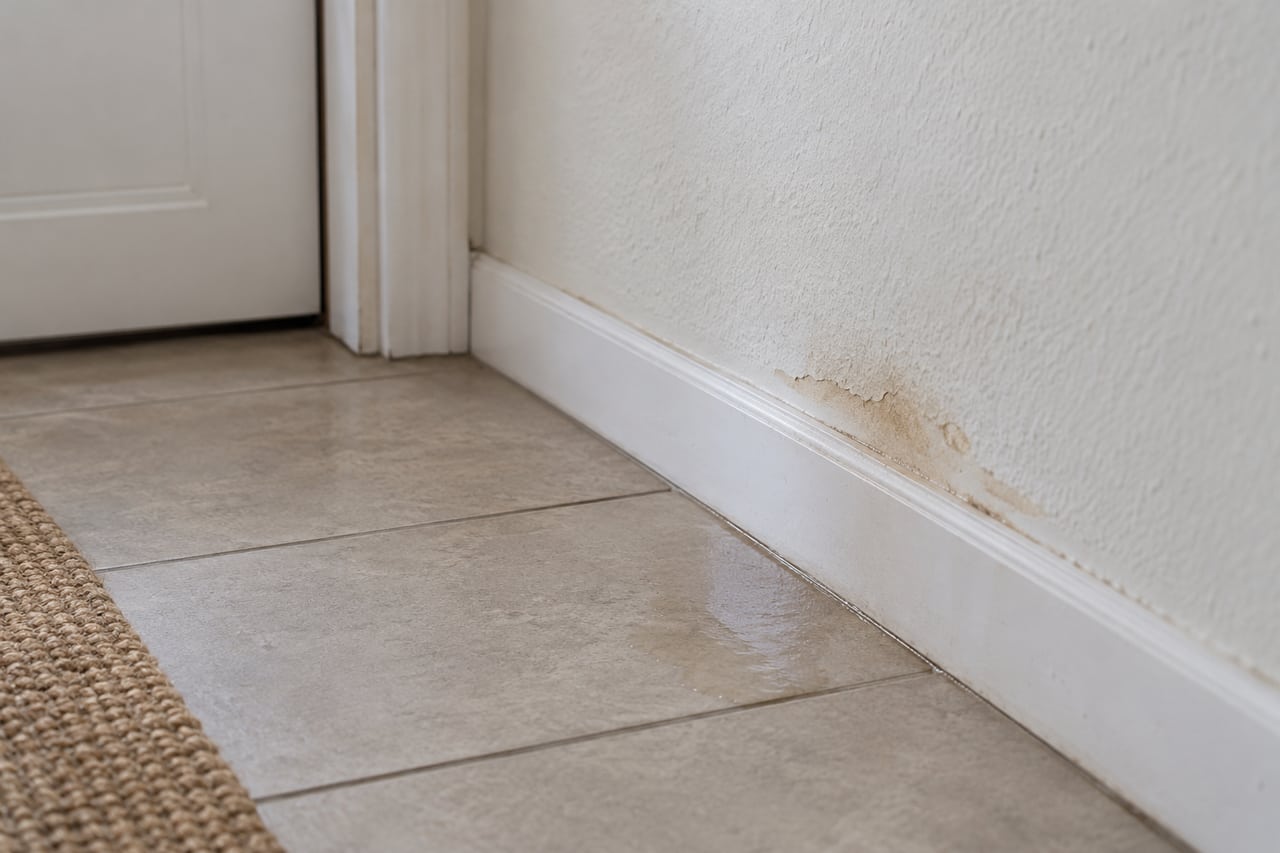
Does a warm patch or damp floor mean the slab must be opened?
A surface symptom is a reason to investigate, not permission to break the floor. Ask what evidence connects the water loss to a pipe beneath the slab and how precisely the proposed opening can be justified.
Describe the floor and the water use
Mark the room on a simple sketch and describe the affected finish. Is there visible water, a changing stain, a lifting floor edge or an unusual warm area? Record what you noticed without pulling flooring up or pressing on a damaged surface. Include any recent plumbing or flooring work you know about.
Do not assume a home’s pipes run beneath the floor because the building has a slab. Pipe routes need confirmation for that property. FPUA lists under-slab piping among possible sources of high consumption, alongside indoor fixtures and outdoor pipes; that list does not diagnose your home.
Fort Pierce Utilities Authority
Ask what would narrow the search
A useful conversation separates three questions: is water being lost, which part of the system is involved, and where is access justified? Ask which questions the proposed inspection can answer. If an approach depends on particular site conditions, have those limits explained before agreeing to it.
A method name is less useful than the result it is meant to produce. Ask whether a finding identifies a confirmed leak, a likely area, or a section that could not be tested. A wide search area is not an exact place to open the floor.
- What evidence points below this floor?
- Which pipe or branch is suspected, and what remains unknown?
- What happens if the first inspection cannot narrow the location?
- Does the quoted scope include a record you can give to the repairer?
Plan the opening before the repair
If opening the slab is proposed, ask for the access area and the reason it was chosen. Discuss furniture, floor finishes, occupants and any rooms that would become unavailable. Tell the person planning the work about any drawings or records you hold; do not guess at buried services or slab construction.
The opening, pipe repair, slab restoration and final floor finish deserve separate scope lines. An estimate for locating a leak is not an estimate for all four. In a condominium or shared building, approval may also be needed from the person responsible for common property.
Check the repair authority and the result
For a property within Fort Pierce city jurisdiction, the city Building Department is a starting point for permit and contractor questions. Give it the actual proposed repair, rather than asking whether all leak detection needs the same permit. The requirements for an inspection and a subsequent alteration may differ.
City of Fort Pierce
Leave with a clear handoff
Ask for the identified location, the evidence behind it, any inaccessible areas and the next decision. If a repair follows, ask how completion will be checked and which finishing work remains. Keep the original symptom notes so a later change can be compared with the starting condition.
Tell us if there is active water, a recent bill change or a previous inconclusive visit. That helps you describe the problem without committing to a demolition method on the phone.
Questions about this work
Is a whole-house repipe always the next step?
No single repair choice can be selected from a symptom or a web page. Ask for the findings and the reasons for each proposed option, including what is excluded.
Will every suspected slab leak be found in one visit?
Confirm the scope and limits of the visit. Hidden routes, access restrictions and intermittent symptoms can leave questions unresolved; ask what a further visit would involve.