What information helps when the suspected line runs across the property?
Describe both ends of the known connection and any visible route information. Mark the rest as uncertain. A path between two buildings is not proof of the buried pipe’s alignment or of a leak along it.
What to establish first
List the house, detached building and outdoor water uses connected to the concern, as far as you know. Note any meter, pump or shutoff labels already visible from a safe position. Do not operate unfamiliar controls or dig to follow a line.
Look for existing drawings or invoices that identify the connection. Tell the inspector whether these are original plans, records of later work or only a sketch. If the records do not match the site, point that out and ask what needs checking.
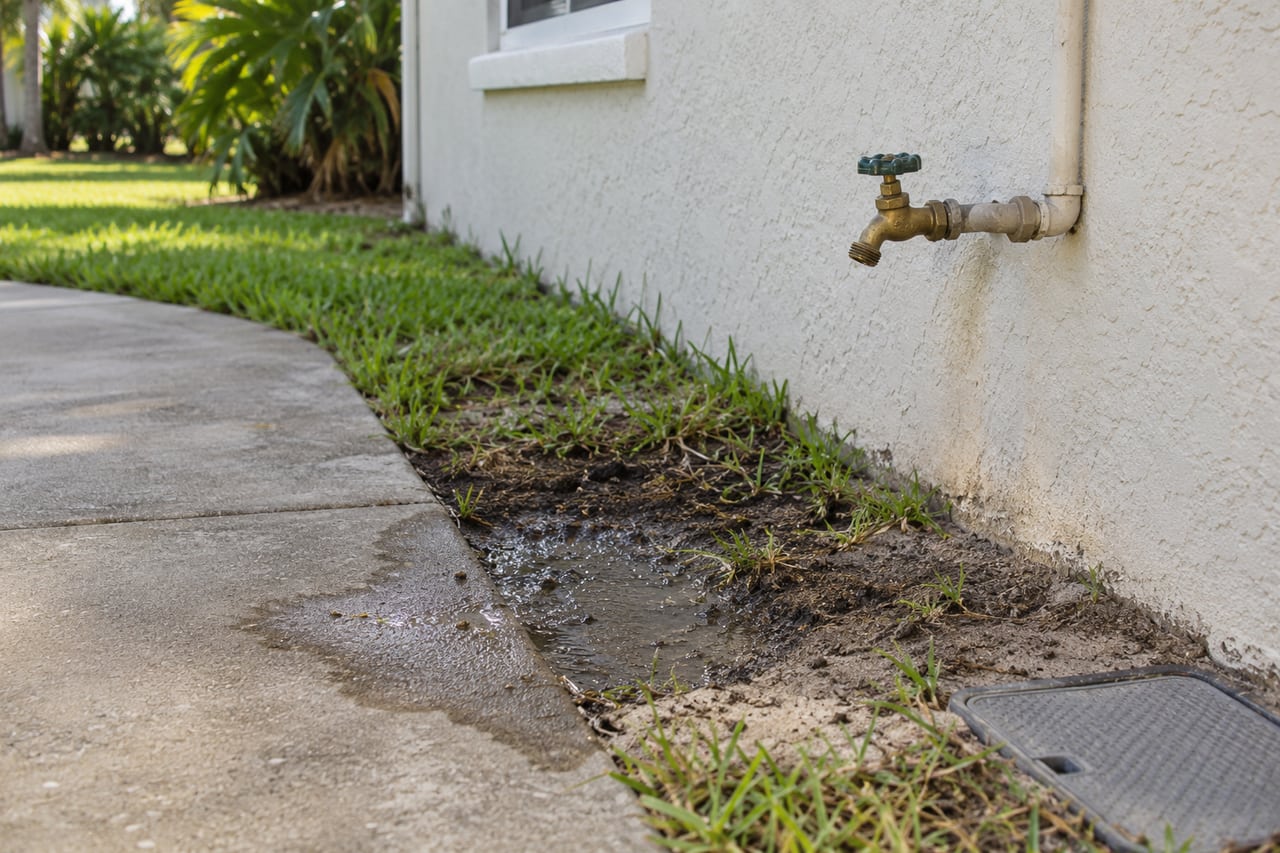
Agree the inspection scope
Say whether water comes from a utility account, a private well or an unknown source. Ask if the proposed visit includes the particular line and any equipment involved. Ask separately about pump or irrigation work. A household plumbing visit may not include either.
Identify access limits along the possible search area, including a locked gate, driveway, landscaping or land belonging to someone else. Agree how those limits may affect the investigation and what a further step would require.
Local checks and the next decision
Before excavation is considered, use the Sunshine 811 process and resolve private-facility locating with the party arranging the work. Its homeowner guidance makes clear that private facilities are not the same as the member utility lines marked through its service. Do not assume an unmarked route is empty.
Sunshine 811
Request a record another person can use
Ask the findings to identify the line investigated, the evidence for the location and any portion that could not be checked. Reference the location to permanent features that will remain after work begins.
If repair access crosses a paved or planted area, have restoration described in the estimate. Reconnecting the pipe and restoring the surface are different tasks. Keep the scope precise enough that a second professional can understand where detection ended and repair planning begins.